1. Wiggle Expression – Natural Random Motion
Expression code:
wiggle(2, 50)What it does:
The wiggle expression automatically creates random movement. It’s perfect for adding life to otherwise static elements.
How it works:
- First value controls frequency (how often it moves)
- Second value controls amplitude (how far it moves)
By adjusting these values, you can create anything from subtle floating motion to aggressive camera shake.
Best used for:
Camera shake, floating text, glitch effects, organic motion.
2. Loop Expression – Repeat Animations Easily
Expression code:
loopOut("cycle")What it does:
This expression repeats your animation endlessly without duplicating keyframes.
Why it’s useful:
You animate once, and the motion keeps looping smoothly for the entire layer duration.
Best used for:
Loading animations, bouncing elements, background motion.
3. Time Expression – Control Animation Speed
Expression code:
time * 100What it does:
The time expression links animation directly to time, creating continuous movement.
Why it’s powerful:
It ensures perfectly smooth motion that never stops.
Best used for:
Rotations, scrolling elements, infinite motion effects.
4. Bounce Expression – Realistic Physics
Expression code:
n = 0;
if (numKeys > 0){
n = nearestKey(time).index;
if (key(n).time > time){ n--; }
}
if (n == 0){
value;
}else{
t = time - key(n).time;
v = velocityAtTime(key(n).time - thisComp.frameDuration);
amp = .05;
freq = 4;
decay = 3;
value + vampMath.sin(freqt2Math.PI)/Math.exp(decayt);
}
What it does:
Creates a realistic bouncing effect after an object stops moving.
Why it’s important:
Adds natural, professional motion without complex keyframing.
Best used for:
Text drops, logo reveals, UI animations.
5. Slide Expression – Smooth Auto Animation
Expression code:
ease(time, inPoint, outPoint, 0, 100)What it does:
Automatically animates values smoothly from start to end.
Why designers love it:
No keyframes required—the animation adjusts automatically to the layer length.
Best used for:
Lower thirds, text entrances, graphic reveals.
6. Random Expression – Controlled Variation
Expression code:
random(0, 360)What it does:
Generates random values within a defined range.
Why it’s useful:
Each layer behaves slightly differently while remaining controlled.
Best used for:
Particle-style animations, multiple object motion, organic layouts.
7. Posterize Time – Choppy Stop-Motion Effect
Expression code:
posterizeTime(12)What it does:
Reduces the frame rate of a layer to create a choppy, stylized animation.
Why it stands out:
Perfect for stop-motion, glitch, or hand-animated looks.
Best used for:
Music videos, motion posters, creative transitions.
8. Delay Expression – Follow Animation
Expression code:
delay = 0.2;
valueAtTime(time - delay
What it does:
Creates a delayed reaction between animations.
Why it’s powerful:
Adds smooth follow-through and connected motion.
Best used for:
Trailing effects, follow animations, character motion.
9. Auto Fade Expression – Smart Opacity Control
Expression code:
fade = 10;
ease(time, inPoint, inPoint+fade, 0, 100) -
ease(time, outPoint-fade, outPoint, 0, 100)
What it does:
Automatically fades layers in and out based on timing.
Why it saves time:
No opacity keyframes needed.
Best used for:
Text animations, subtitles, social media videos.
10. Scale Pulse Expression – Beat-Based Animation
Expression code:
s = 100;
amp = 10;
freq = 2;
[s + Math.sin(timefreq2Math.PI)amp,
s + Math.sin(timefreq2*Math.PI)*amp]
What it does:
Creates a rhythmic pulsing scale animation.
Why it’s effective:
Perfect for syncing visuals with music beats.
Best used for:
Logos, icons, beat-sync animations.
Final Thoughts
After Effects expressions are not just shortcuts—they are powerful creative tools. Once you understand how they work, you’ll animate faster, cleaner, and more efficiently.
Start by using one expression at a time. Experiment with values, combine expressions, and over time you’ll build your own animation systems that save hours of work and elevate your motion design.
Recent Blogs
-
Create Procedural Spiral Path (Dynamic Vector Spiral Expression)
-
Animated 2D DNA Helix Path (Procedural Helix Expression)
-
Text Glitch Effect Expression (Real-Time Character Corruption)
-
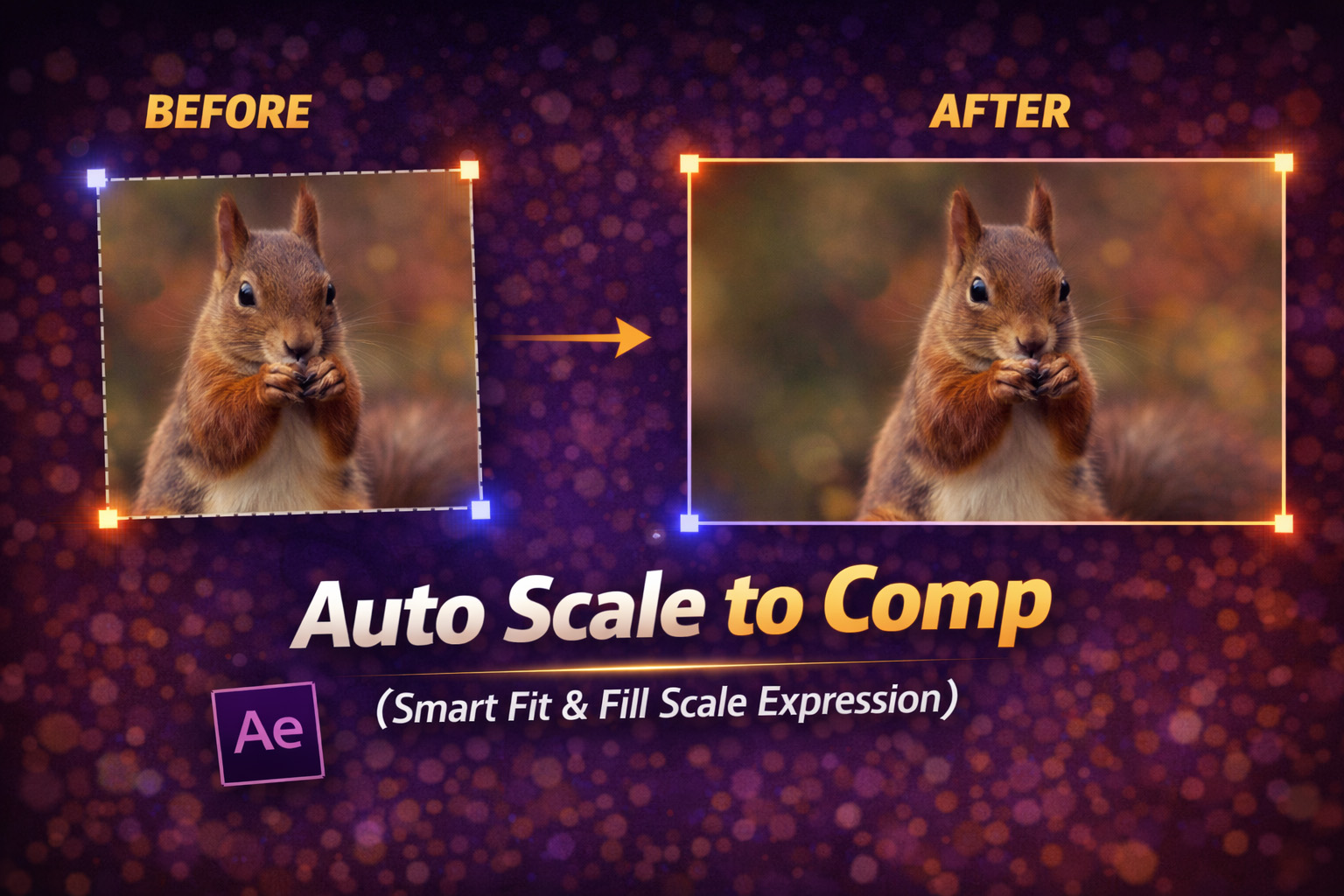
Auto Scale to Comp (Smart Fit & Fill Scale Expression)
-
Snap to Layer or Comp Corners (Dynamic Alignment Expression)
-
Rainbow Color Cycle (Seamless HSL Color Loop Expression)
-
Christmas Lights Color Generator (Procedural Holiday Palette Expression)
-
Neon Light Flicker (Organic Electrical Glitch Expression)
-
Hanging Ornament Sway Animation (Natural Pendulum Rotation Expression)
-
Bell Shake & Ring Motion (Impact-Driven Oscillation Expression)